
Levukana Women Redefine Farming and Gender Roles in L
November 26, 2025
Women in Levukana Village on Vanuabalavu are breaking barriers and reshaping long-held traditions, stepping confidently into the fields to farm alongside men. By challenging patriarchal norms that once confined them to domestic roles, they are redefining leadership, labour, and equality in one of Lau’s most remote communities.
For generations in Lau Province, farming was regarded strictly as men’s work. Women contributed significantly to community life but were expected to remain indoors or support through fishing. Through the Levukana Shall Rise program, led by the Levukana Women’s Association (LWA), this gendered division of labour is being dismantled.
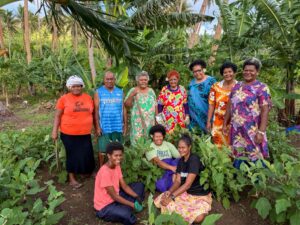
Established more than 20 years ago as a community social group, LWA has always worked to ensure that women and girls are included in village development. Today, it is driving a bold agenda centred on sustainable agriculture, food security, and gender equality.
Under the program, women have received training in sustainable agriculture, financial literacy, land management, and women’s rights. Equipped with new skills, they have cleared land, revived traditional farming knowledge, and introduced new crops such as bhindi (okra) for the first time.
For younger women like 26-year-old Iliseva Joyce, wife of the village headman, the change has been life-altering.
“Growing up, we knew women stayed indoors or went fishing while men worked the land. The program opened our eyes. We can do men’s work and it’s also okay for men to help with cooking, laundry, and the things we used to do alone.”
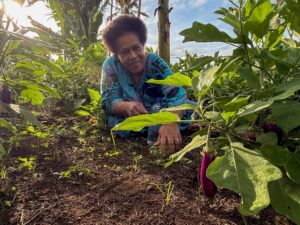
These shifts are seen across households and the wider community. Women have become more confident, active, and economically independent, while men are increasingly sharing responsibility in both farming and domestic work.
Village Chief Uraia Tauyavu, 65, who attended organised trainings and workshops to show his support, has witnessed the transformation firsthand.
“Development is no longer one-sided, it now belongs to everyone,” he said, noting how men now support women in farming and share roles at home.
Economic empowerment has been another major milestone. The association now earns between $100 and $200 a day from farm sales, with profits reinvested into village development. This new income stream has strengthened women’s decision-making power and demonstrated their invaluable contribution to the community.
The change is also generational. Younger women and girls now see strong role models in their mothers and grandmothers. Men are joining in planting, digging, and attending gender-equality workshops. For 75-year-old Kelera Ratu, the oldest member of LWA, the shift has been remarkable.
“In the past, we treasured women by keeping them away from hard work. Now we see their strength. When men and women work together, the whole village rises.”
Unity has grown beyond Levukana as well. Women in Suva and Levukana, once operating under different group names, have now united under one identity and one purpose, advancing Levukana’s development.
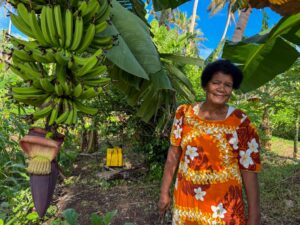
Supported by Women’s Fund Fiji, this strengthened solidarity reinforces the program’s goals: promoting women’s rights, supporting economic empowerment, building skills through training, raising awareness on living free from violence, and advocating for gender-responsive policies at the village and tikina levels.
Ends
Recent Whats New
From Restless Nights to Renewed Hope
January 23 2026
Taveuni Women’s Empowerment Support Group Pushes Boundaries
January 14 2026
Resilience and Sustainability in Action
October 28 2025